The Reality of the Knowing-Doing Gap
You know that feeling of walking out of a training session with fresh resources and a heart full of inspiration, only to hit a wall the moment you face a student whose profile doesn’t fit the “textbook” example? It’s the gap between knowing the Science of Reading and skillfully navigating the messy, real-world application of it all with real students in a real classroom.
Having the foundational knowledge is one thing, but the true magic happens when you move from theory to high-level clinical precision.
Why Clinical Practice Matters
In our digital era, teachers have access to hundreds of hours of professional development and training, yet very few programs give participants the chance to immediately apply what they’ve learned with real students.
Research shows that pairing theoretical learning, intentional practice, and coaching is the most effective way to meaningfully improve teacher pedagogy. In fact, even when teachers attend trainings, understand the theory behind instructional strategies, and practice new routines, only 5% actually apply that knowledge in the classroom. However, when teachers receive direct support from a mentor through a structured coaching model, that number jumps to 95%. (Joyce & Showers)
Coaching creates the space to hone your skills in a real classroom environment because, let’s face it, no lesson plan can account for every unexpected moment that naturally unfolds when real students walk through the door.
For additional information regarding effective teacher training, please visit the Center for Public Education, Teaching the Teachers.
What Happens at the Learning Lab?
To address the need for clinical practice with students to support the application of practical skills, the Chartwell Teaching Institute offers the Literacy Clinic, an immersive training that provides a direct, systematic approach grounded in the neuroscience of reading.
The Literacy Clinic focuses on the practice of skills necessary to implement a structured literacy curriculum through a hands-on model that mirrors the very classrooms participants return to each day. Ongoing coaching through collaborative planning and problem-solving maximizes teacher and student learning, and by practicing skills alongside mentor teachers, participants are better equipped to:
- Move beyond just following a scope and sequence to truly hearing student errors and knowing exactly which prescriptive moves to make.
- Collaborate with other dedicated educators to plan, practice, problem-solve, and execute key components of a structured literacy lesson.
- Receive immediate feedback on your pedagogy and lessons to enhance and bolster routines and drills.
- Connect the why, what, and how of structured literacy instruction in real classrooms.
The Literacy Clinic serves as a learning lab to take your structured literacy routines and strategies to a new level. In the words of one of our 2025 participants,
“The training reaffirmed that we are indeed implementing effective Structured Literacy instruction in our groups and provided more tools for us to use to be even better in our instruction and determination of student grouping and goals. I’m super excited about using the assessment tools, strategies, teacher moves, and protocols with the students this fall.”
Take The Next Step. We hope to see you there.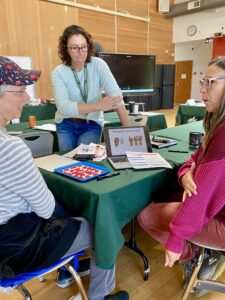
Who: You
What: The Structured Literacy Clinic
When: June 29-July 2nd, 8:30-3:30
Where: Chartwell School