In the realm of early elementary reading instruction, mastering high-frequency words, often called sight words, stands as a critical milestone in a child’s journey toward literacy. These words, often considered non-phonetic or irregular, present a unique challenge for teachers. Early readers simply must be able to read these kinds of words to achieve fluency, but how do we best teach them?
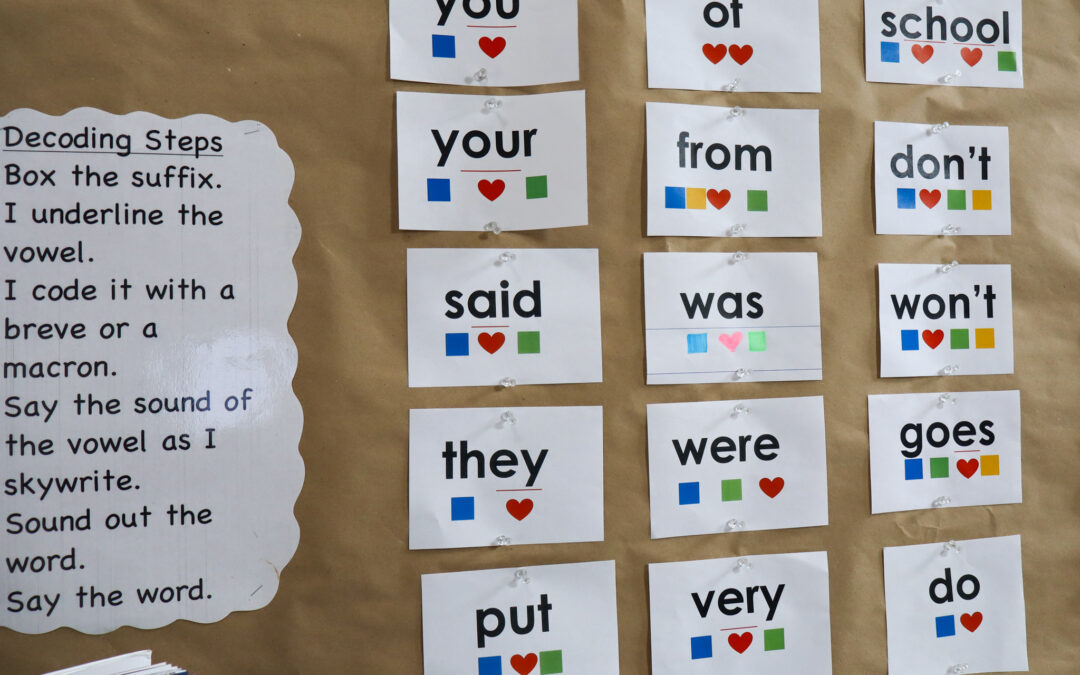
One approach gaining traction in classrooms is the Heart Words strategy, also referred to as partial decoding.
Traditionally, sight word instruction relied heavily on rote memorization, with little to no connection between sound and symbol. Educators tended to focus on drill and practice methods. While effective for some, this approach left many students struggling to internalize these words, especially when reading in context. The Heart Words strategy seeks to improve this process by teaching students to use their decoding skills while reducing the emphasis on memorizing a whole word.
At the core of the Heart Words strategy lies the concept of partial decoding. Rather than treating sight words as a whole, students are encouraged to break them down into recognizable components, particularly parts that children have been taught. Generally speaking, high-frequency words have only one part that is irregular and needs memorization. For example, the ‘o’ in from or the ‘ie’ in friend are the only irregular parts. All the other letters represent very regular sounds and therefore, don’t require special memorization.
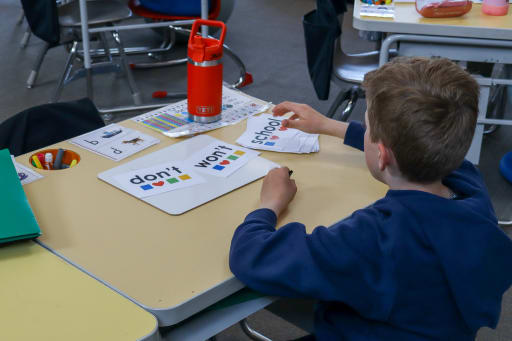
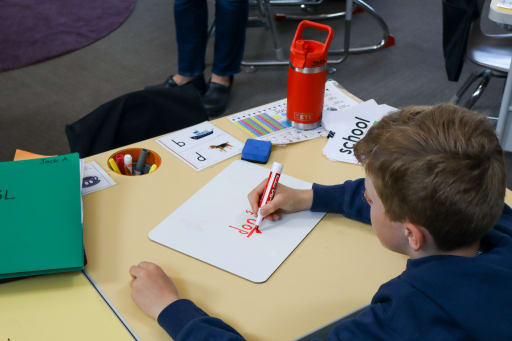
By identifying familiar patterns within these words, learners practice decoding as the first line of attack for unknown words.
The partial decoding method has a solid theoretical background based on the neuroscience of how brains learn to read. However, the method is new enough that empirical studies have only just begun. It is a method with a lot of potential and promise and we should watch for evidence of effectiveness as it arises.
Eide, Denise. Uncovering the Logic of English: A Common-sense Approach to Reading, Spelling, and Literacy. 2nd ed. pbk. Minneapolis, MN, Pedia Learning Inc, 2012 and ReallyGreatReading.com
Written by Chantel Touryan-Schaefer, co-director of Chartwell Teaching Institute.
Chantel Touryan-Schaefer was a first-grade classroom teacher for 14 years before following her passion for reading instruction to become a Reading Specialist. Chantel is a Reading Specialist and Certified Dyslexia Advocate in California and is working toward her CALT certification. She is currently a district level coordinator for Early Literacy as well as Associate Director at Chartwell Teaching Institute. She continues to support burgeoning readers throughout the state of California both working directly with students and school staff to enhance reading instructional practices.