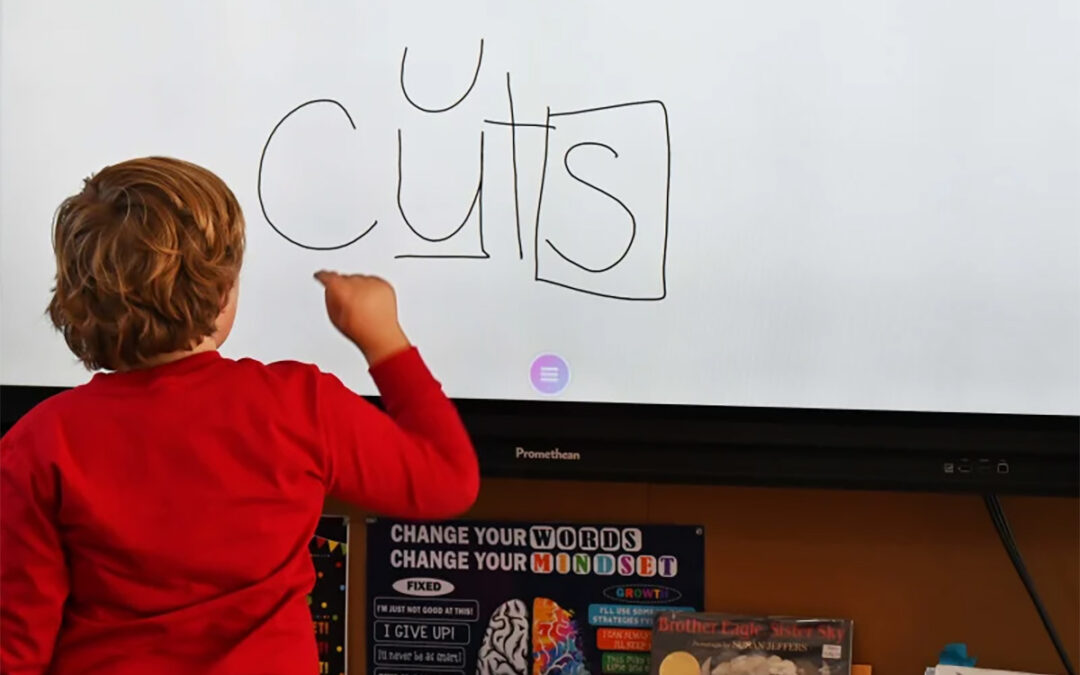
Here’s a “pro tip” from Shane Whitman, one of our spotlighted teachers:
I always respond to students with specific positive feedback on what they are doing well. It could be how they spell a word in structured literacy, a math problem, word choice when writing, or their contributions during a class discussion. I will tell students directly what they are doing well. Depending on the student, it will be one-to-one as I walk by their desk, or in front of the class.
Once positive feedback is given, I guide and question students to discover the answer on their own. Positive feedback helps me understand where the student is coming from and gives me the information I need from the student to teach. Positive feedback also builds the connection between teacher and student and gives students the confidence to learn from their miscues. The feedback also needs to be specific so that students recognize that you are paying attention to them and they can really take ownership of their successes. It also contributes to the enjoyment of teaching.
Here’s a game that Shane uses regularly in his classroom:
Game On: Incorporating Games and Movement into Instruction
Engage students through movement as they learn or review concepts. Using direct instruction, this game captivates students as they demonstrate their understanding of previously taught syllable types.
Materials needed:
- 1 Whiteboard
- 3 Markers (1 black and 2 red)
- List of taught words
Instructions:
Divide your class into two teams. Have the first two participants start standing across the room from the whiteboard with their back to the board. Record a word for each student from the list of taught words on the whiteboard behind each student. Have students do 15 jumping jacks, push-ups, burpees, etc before they can run to the board and code the words. Award points for coding the word properly (both teams), the first time to cap their marker and put it on the floor gets the chance to read their word out loud. If they are able to read it correctly they earn another point for their team.
Occasionally host a bonus round after students have coded and read the word – pose a question to both teams. For example: driving – ask students to explain why the silent e is missing from the word. If the two players are struggling you can allow them to consult with the rest of their team before answering.
Check out how Chartwell teachers put this game into action within their own classrooms.